Overview
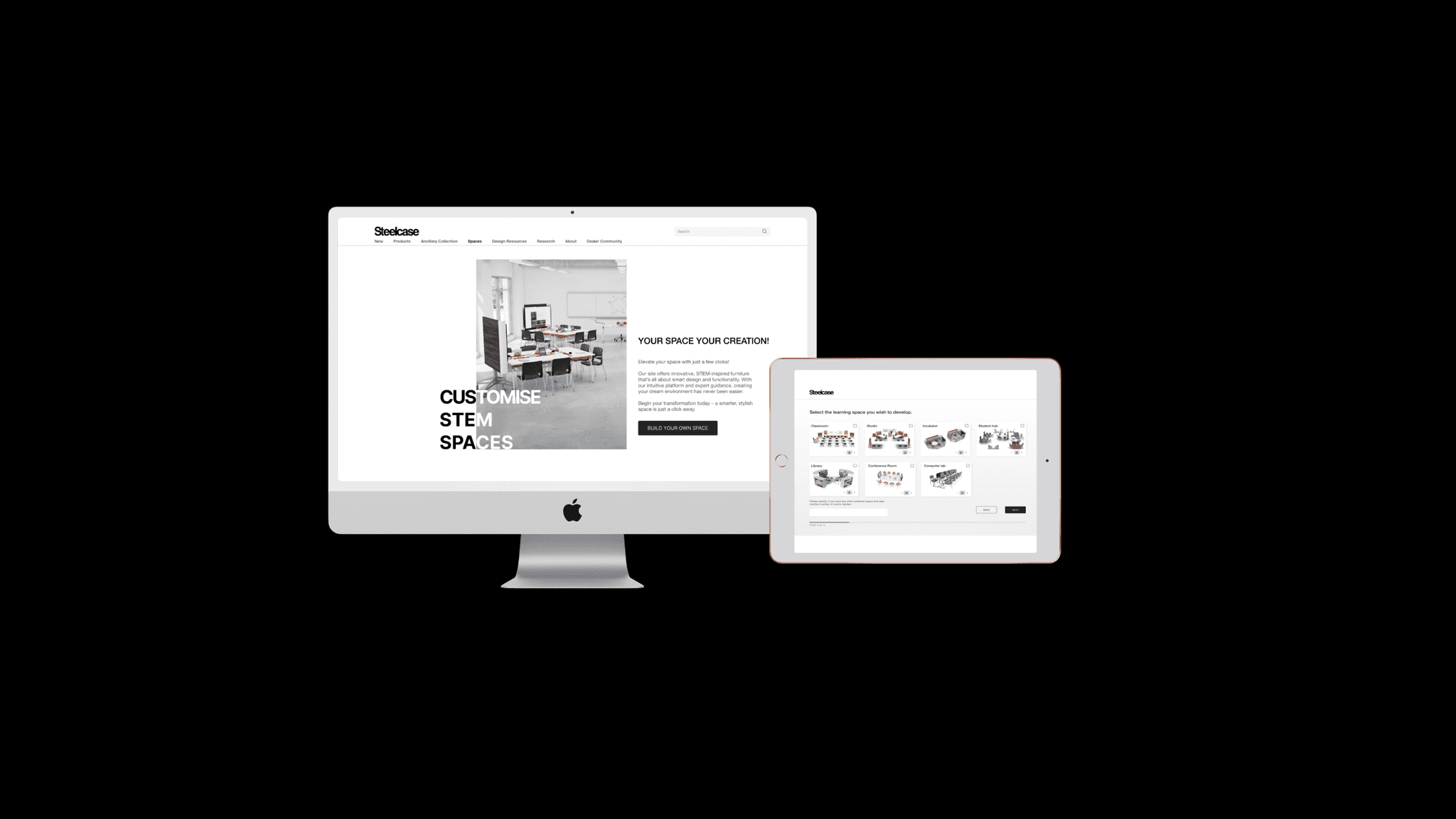
As the UX designer on an ASU × Steelcase collaboration to reimagine STEM classroom furniture, I designed the digital front door for the program: a "Build Your Own Space" buying experience that lets educators and facilities buyers configure a STEM classroom — by space type, quantity, and furniture category — and submit a request, without ever needing to talk to a sales rep first.
Introduction
Steelcase and ASU partnered on a two-semester capstone to design STEM-focused active-learning furniture — five sub-teams built physical concepts across chairs, tables, podiums, storage, and accessories. But a new furniture line is only useful if the people who actually buy it (department heads, facilities managers, procurement staff at universities and schools) can find and request the right combination for their space. That buying journey didn't exist yet — my role was to design it.
Problem
How might educators and facilities buyers go from "we need to outfit a STEM classroom" to a concrete, submitted request — without needing deep furniture-catalog knowledge or a back-and-forth sales conversation — while still capturing enough detail (space type, quantities, furniture mix, preferences) for Steelcase to respond with a real, personalized solution?
Research
Grounded the buying flow in the same research driving the physical product teams — the mismatch between static classroom furniture and the collaborative, technology-integrated needs of modern STEM education — then focused specifically on the acquisition journey: what information a buyer realistically knows up front (space type, room count) versus what needs guided discovery (furniture mix, add-ons), and where a generic B2B contact form would lose them.
"
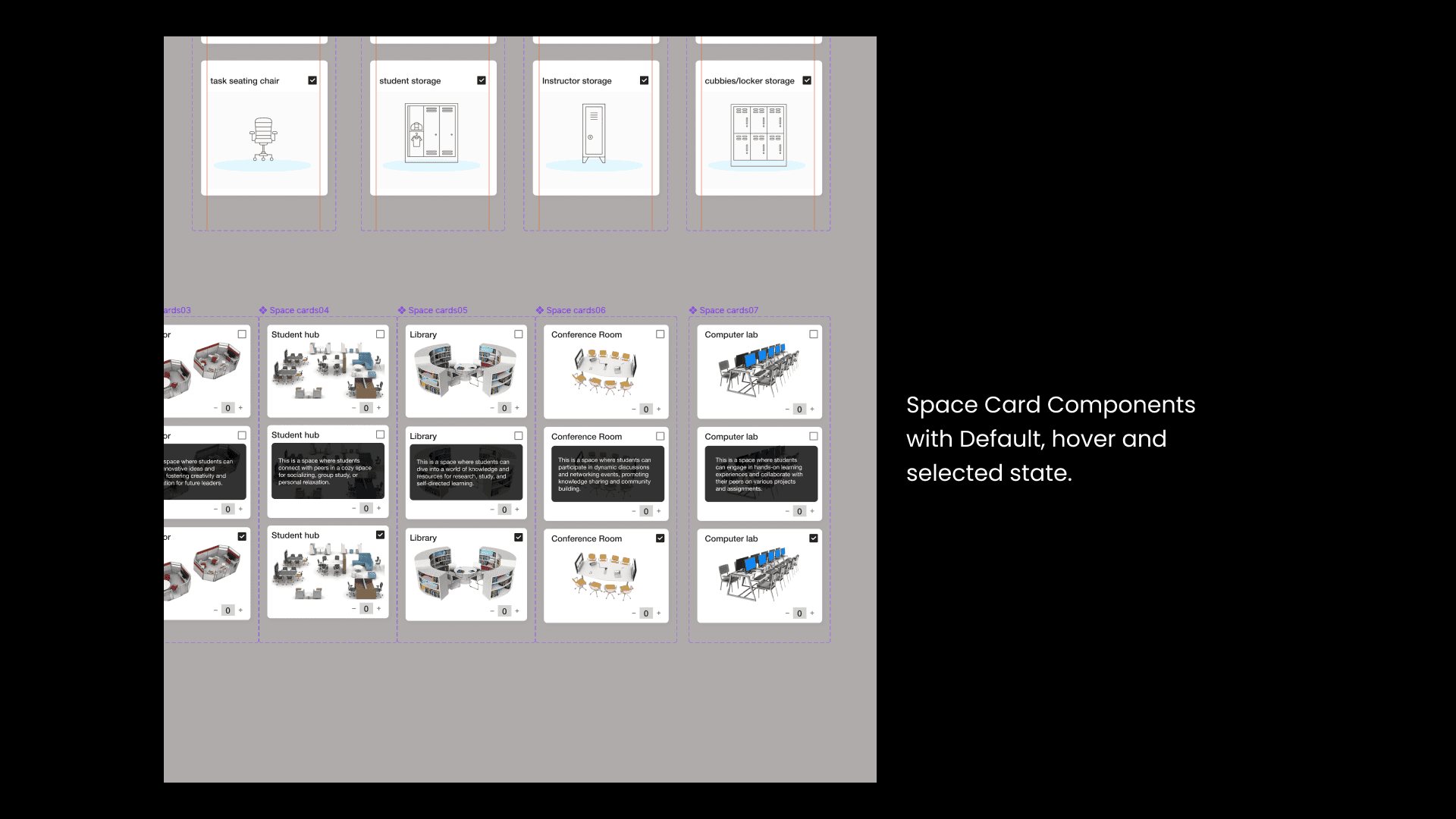
With figma variables users can achieve a heightened sense of realism when interacting with the prototype.
Ideation
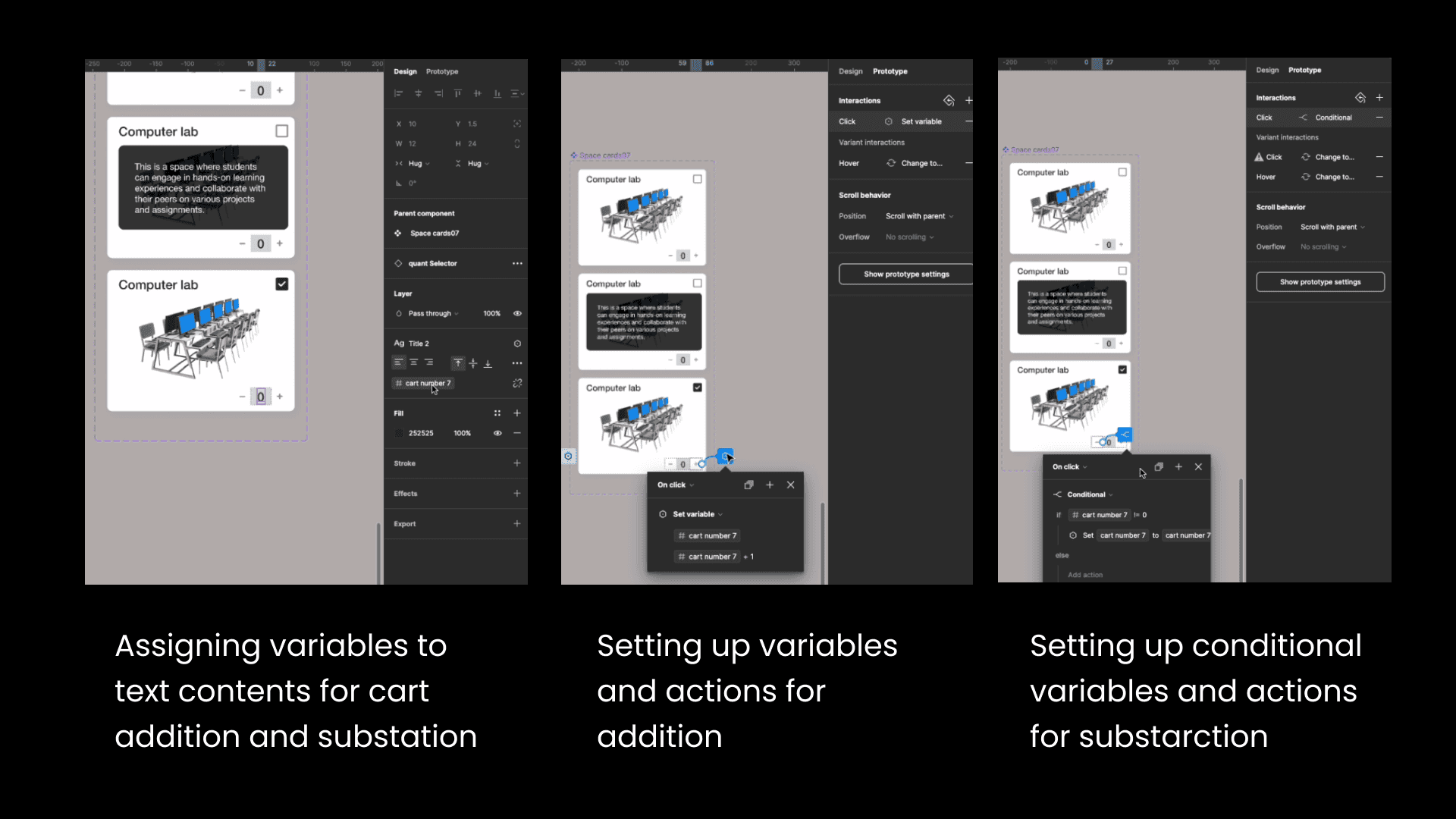
Given how many space types, furniture categories, and quantity combinations the configurator needed to support, I built the flow around Figma variables rather than static screens — using cart-style variables (one per furniture category) to drive a single reusable set of screens instead of hand-building a unique screen for every possible combination. This kept the system scalable to new products without redesigning the flow itself, and meaningfully reduced the number of screens needed to support the full range of buyer scenarios.
Solution
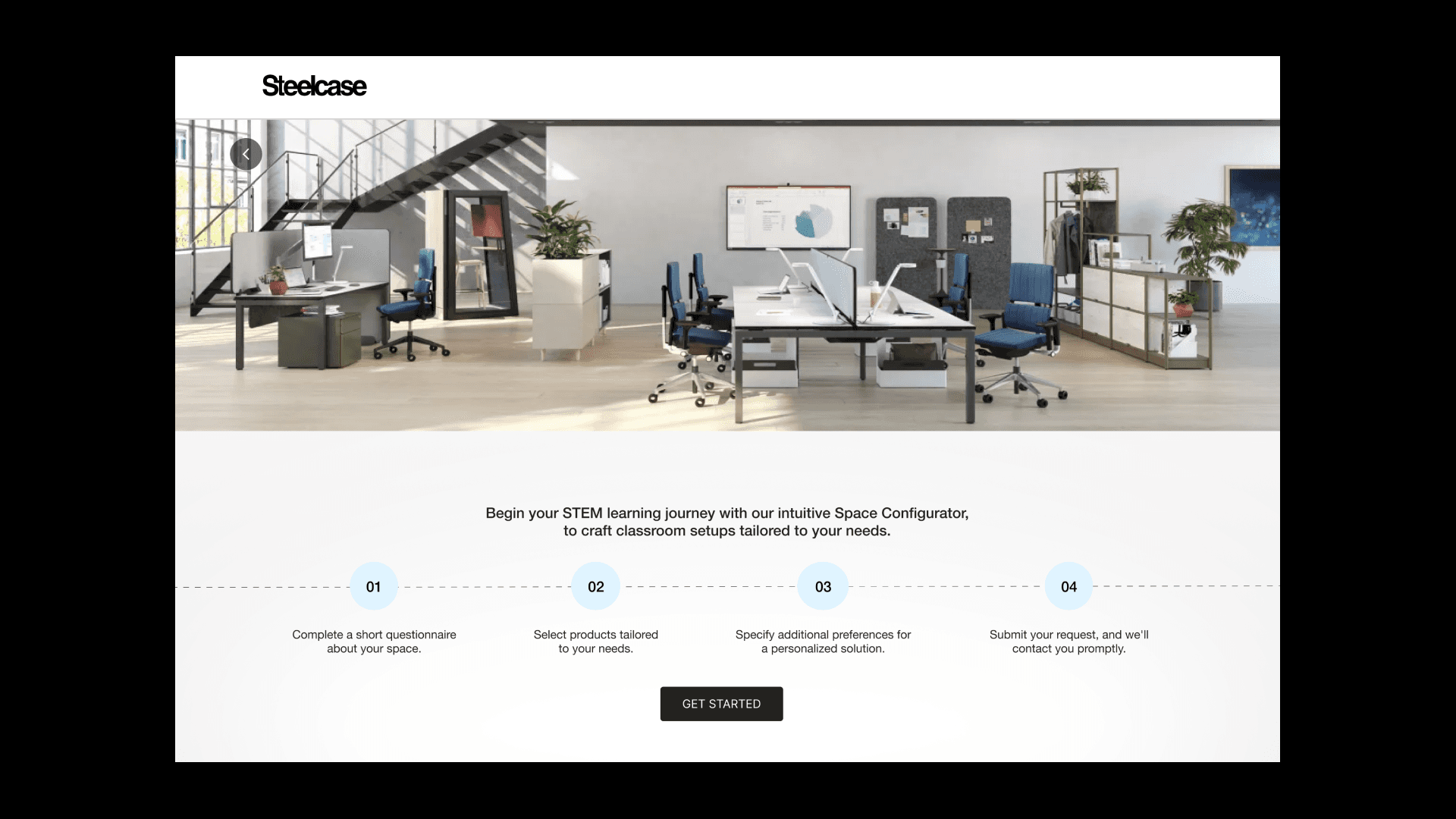
1. A branded landing experience, not a generic contact form. Opens on a Steelcase-styled hero — "Your Space, Your Creation" — pairing a real STEM classroom photo with a single clear CTA: "Build Your Own Space."
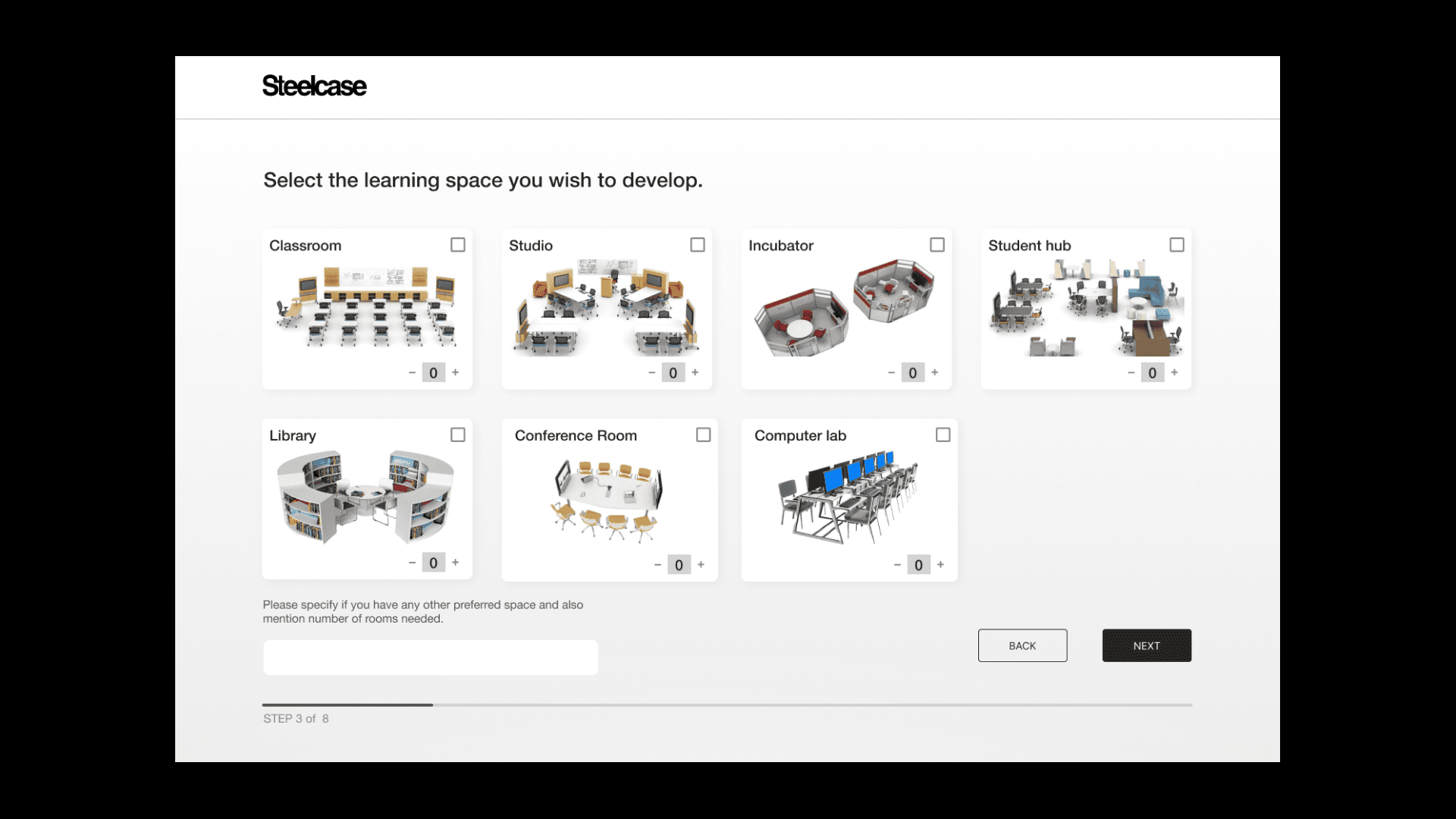
2. A guided, four-step request flow. Buyers move through: selecting their learning space type (Classroom, Studio, Incubator, Student Hub, Library, Conference Room, Computer Lab) with quantities for each; choosing furniture categories (Table, Chair, Storage, Podium); and specifying additional preferences — each step shows clear progress ("Step 3 of 6") so the request never feels open-ended.
3. Variables-driven, not hardcoded. Every selection maps to a cart variable behind the scenes, so the same screens flex to any combination of spaces and furniture rather than needing a unique path built for every scenario.
4. Confirmation that respects the buyer's time. The submission closes with a clear "Your request has been submitted" screen, a reference number by email, a 3–5 business day response commitment, and the ability to edit the request or start a new one — closing the loop instead of leaving buyers wondering what happens next.
Impacts
Delivered a complete, working buying-experience prototype — from branded landing page through a variables-driven, six-step configurator to confirmation — giving the Steelcase furniture line an acquisition path that didn't exist before. The variables-based architecture meant the system could scale to new space types and furniture categories without a screen-by-screen redesign.

