Overview
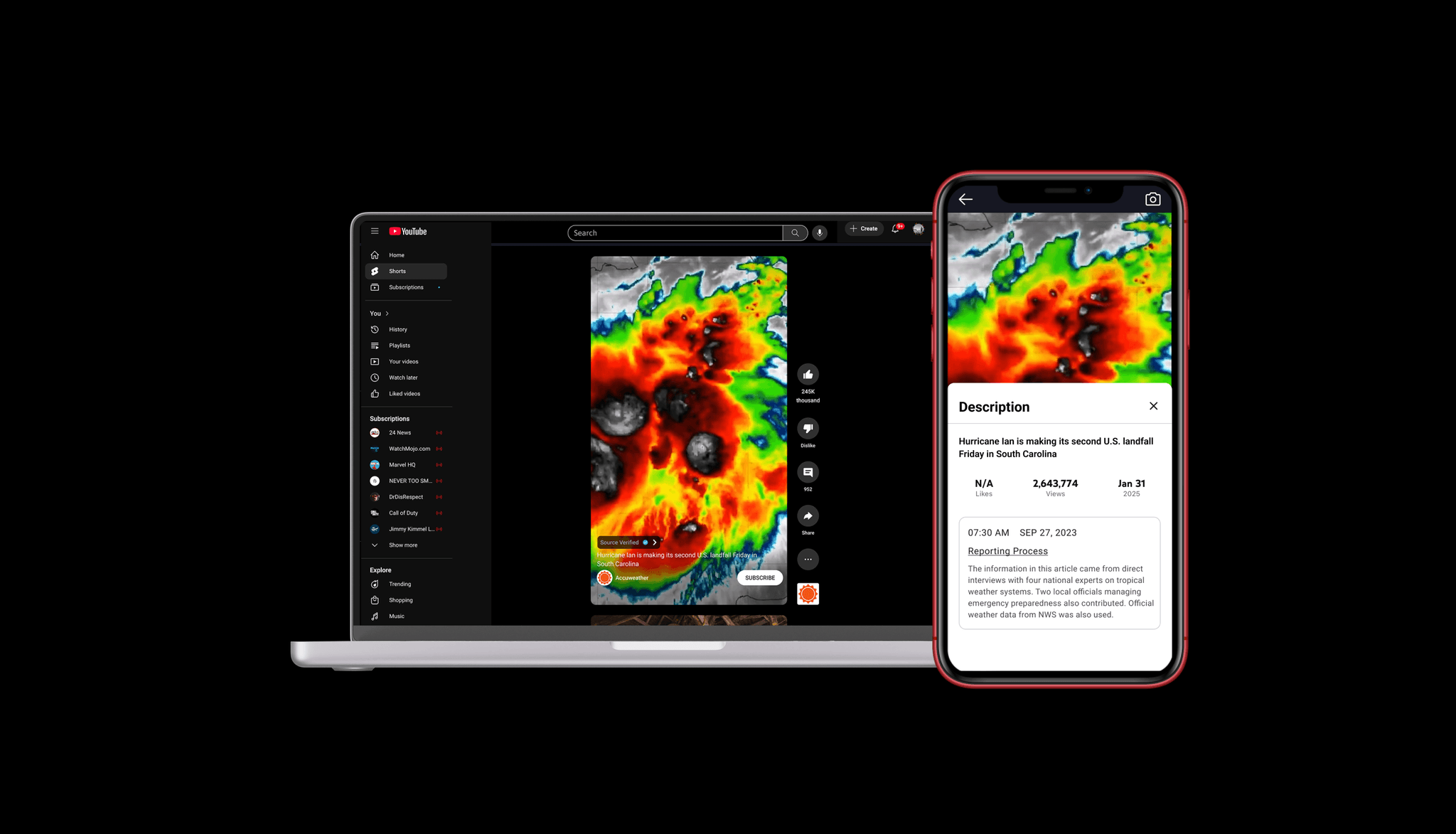
Designed a contextual trust-signal system for YouTube Shorts — surfacing things like AI-generated content, creator location, and monetization directly on the video as lightweight, tap-to-expand badges, without interrupting the swipe-based viewing experience. In testing, the approach increased perceived transparency by 70% and user trust by 85%. Two years later, YouTube's own team shipped a strikingly similar idea platform-wide: moving AI disclosure labels for Shorts off the description and onto the video itself, for the same reason this research found — a label nobody sees doesn't function as a disclosure.
Introduction
Short-form video consumption had exploded alongside a rise in AI-generated and AI-altered content, and disclosure hadn't caught up. YouTube already required creators to disclose AI use, but that information lived buried in a video's description — invisible to someone swiping through a feed in real time, which is how almost everyone actually watches Shorts. This is the same gap YouTube's own team pointed to when they overhauled platform-wide AI disclosure in May 2026, moving the label onto the video itself specifically because content sitting in an unopened description wasn't doing its job.
Problem
How might we enable real-time understanding of a video's context — is it AI-generated, where's it from, is it monetized — in a fast-moving, swipe-based environment, when evaluating trust and intent takes active effort that directly conflicts with passive, scroll-based consumption? Users need critical context even when the platform already has it, without adding friction.

Research
Studied how people actually watch Shorts: low tolerance for anything that interrupts a fluid feed, active avoidance of tapping overlays mid-playback, and a pattern of not equating likes or follows with trust — people wanted legitimacy signals up front, especially for news-related content. Full research detail is in the presentation deck.
"
This approach provides context on demand, avoiding disruption while promoting transparency.
Ideation
Tested three directions with users before landing on a final design:
Always-On Context (a persistent banner) — high visibility, but users found it cluttered and intrusive: "This feels like it's blocking part of the video I'm here to watch, not read."
Pause-Based Context (surfaced only when a user paused) — better timing, didn't interfere with active viewing, but depended on a behavior most Shorts viewers don't do: "I don't usually pause Shorts, I just scroll."
Contextual Badge System (a small, tap-to-expand badge) — high visibility without disrupting content; users noticed it passively and engaged only when curious: "It feels natural — I'm not forced to interact, but it's there if I'm curious."
The badge system won. Full exploration and user quotes are in the presentation deck.

Solution
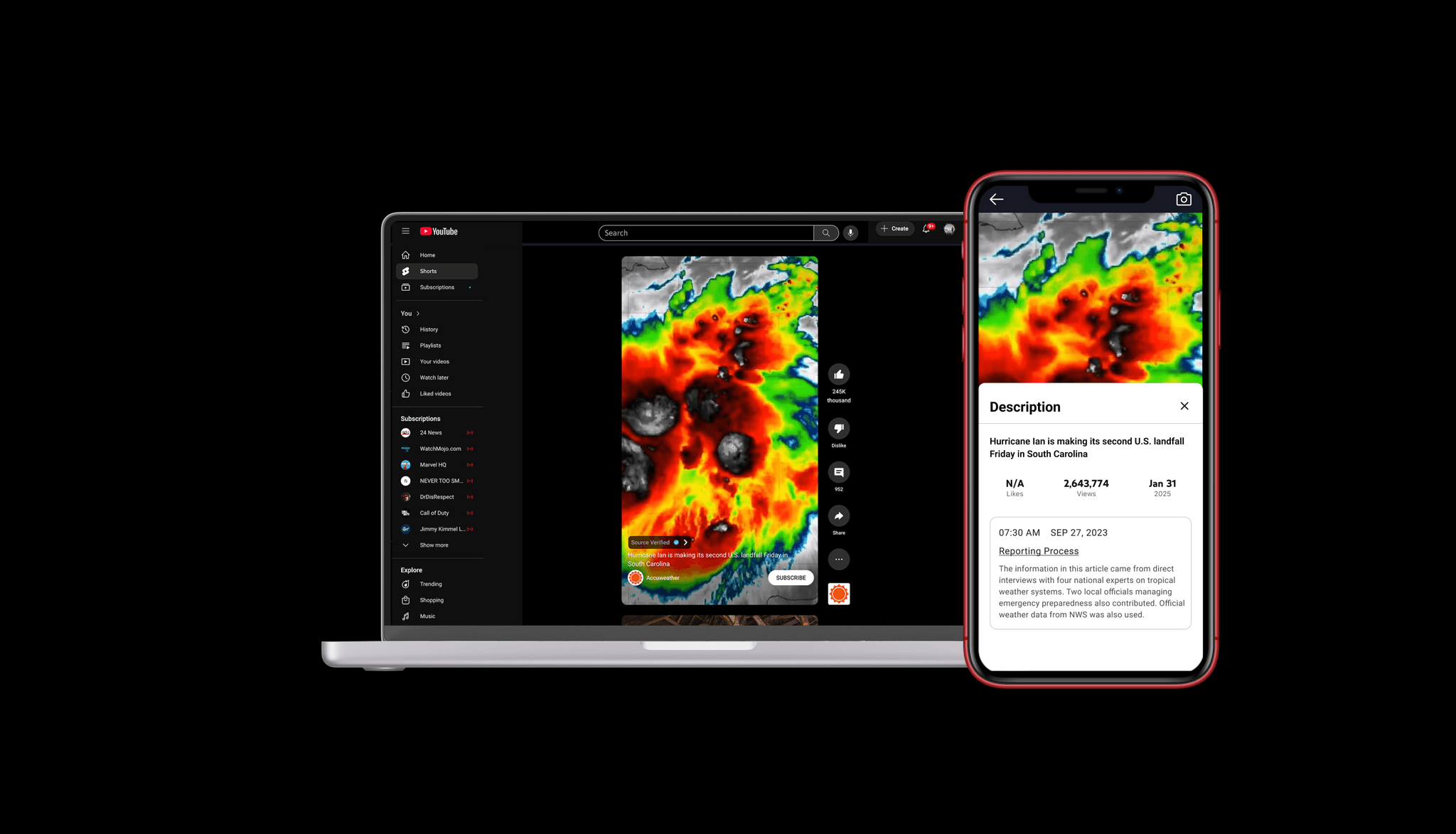
1. A tap-light badge, overlaid on the video itself. Landed on a subtle badge (flagging things like AI use or creator monetization) placed directly on the video, not in the description below it. Tapping it reveals deeper context — nothing is forced into view. This is the same direction YouTube's own team landed on when they moved AI disclosure for Shorts onto the video itself platform-wide in May 2026.
2. One signal at a time, ranked in real time. Rather than surfacing every available signal at once, the system works in three steps: Signal Detection (context generated from platform systems and creator input — AI content, source, location, intent), Signal Prioritization (signals ranked in real time, only the single most relevant one shown for that moment), and In-Flow Delivery (a lightweight signal introduced without interrupting consumption; deeper context revealed only if the user engages). This keeps cognitive load low without hiding what matters.
3. One system, many signal types. The same badge pattern generalizes across categories that affect trust differently — AI-generated content, creator location, and monetized or sponsored content (e.g. a "Buy Super Thanks" badge) — one visual language covering several kinds of context.

Impacts
+70% increase in perceived transparency, +85% increase in user trust, achieved without disrupting viewing behavior — and designed to scale across content types and signal categories from the start. Two years later, YouTube's own team shipped a strikingly similar direction platform-wide: moving AI disclosure onto the video itself for Shorts and adding automatic detection for undisclosed AI content — independent validation of both the problem and the direction.

